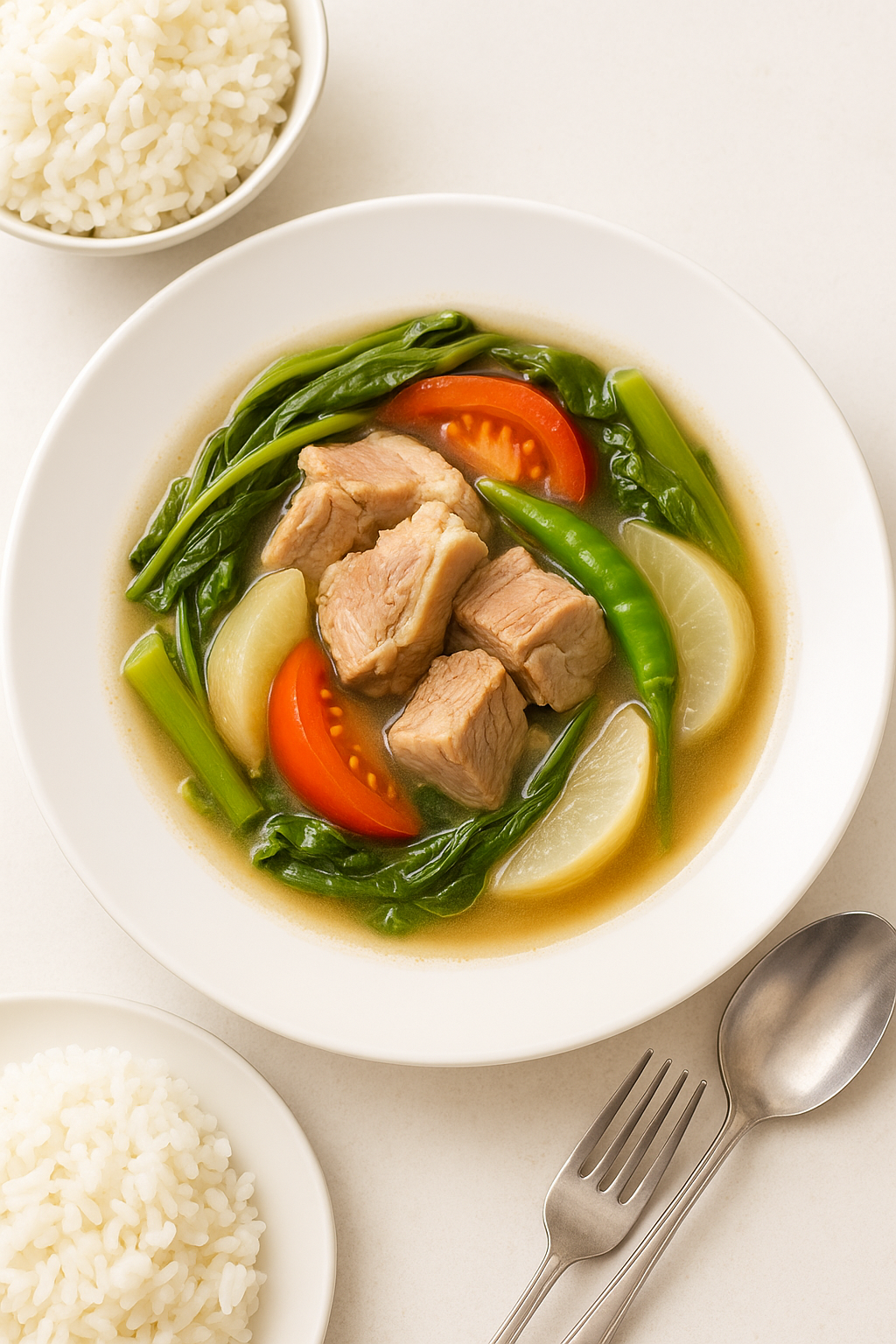
One of the most beloved Filipino dishes — warm, tangy, savory pork soup simmered with vegetables and tamarind.
❤️ Introduction
If Adobo is the soul of Filipino cooking, then Sinigang is its comfort. Every Filipino knows the feeling of coming home on a rainy day, the smell of sour tamarind broth drifting from the kitchen, and a big pot of Sinigang simmering slowly on the stove. It’s the kind of dish that makes you drop your bag, wash your hands, and sit down even before anyone calls you to eat.
Growing up, Sinigang na Baboy was the dish my mom cooked when she wanted to nourish us — truly nourish us. With its tangy broth, tender pork chunks, soft vegetables, and the perfect balance of salty and sour, it tastes like a warm hug in a bowl. Whether you’re Filipino or discovering this dish for the first time, you’re about to fall in love with one of the Philippines’ most iconic comfort foods.
This is my modern, detailed, beginner-friendly guide to making the perfect Sinigang every time — balanced, flavorful, and beautifully comforting.
⭐ Why You’ll Love This Recipe
✔ True Filipino home-cooking
✔ Comforting, warm, and flavorful
✔ Packed with vegetables
✔ Perfect for cold or rainy weather
✔ Foolproof even for beginners
✔ Ready in under 1 hour
📝 Ingredients
Pork Options (Choose One)
- 1 ½ lbs (700 g) pork belly
- OR 1 ½ lbs pork ribs
- OR 1 ½ lbs pork shoulder
(ribs = best flavor, belly = tender and rich)
Aromatics & Base
- 1 medium onion, quartered
- 2 medium tomatoes, quartered
- 5 cups water or pork broth
- 2 tablespoons fish sauce (patis)
- Salt & pepper to taste
Sour Component Options
Choose one:
- 1 packet tamarind mix (Sinigang sa Sampalok)
- OR 1 cup fresh tamarind pulp
- OR ½ cup kamias (bilimbi)
- OR ½ cup calamansi juice
Vegetables
- 1 cup labanos (daikon radish), sliced
- 1 cup sitaw (long beans), cut into 2-inch pieces
- 1 medium eggplant, sliced
- 1 cup kangkong (water spinach) or cabbage or bokchoy
- 2 pieces green chilies (optional)
Optional Enhancers
- 1 tablespoon miso (for richer broth)
- ½ sachet of Knorr pork cubes
- 1 tablespoon brown sugar (balances sourness)
🍳
Instructions (Detailed, Step-by-Step)
1. Boil the pork (the flavor foundation)
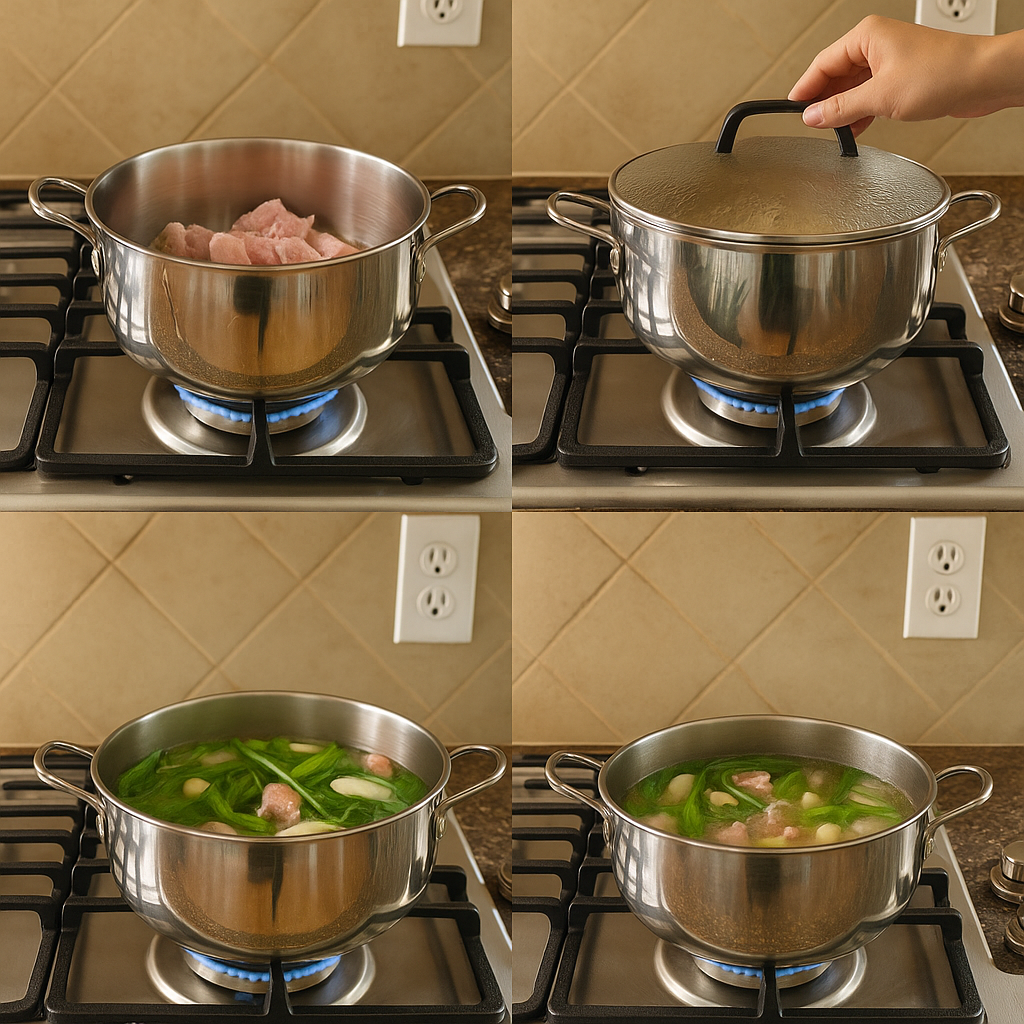
In a large pot, add pork, onions, tomatoes, and water or broth.
Bring to a boil and skim off any foam.
Reduce heat to medium and simmer for 30 minutes, or until pork is tender.
This broth will become the soul of your Sinigang.
2. Season the broth
Add fish sauce, a pinch of salt, and pepper.
Let it simmer for another 5 minutes.
3. Add the souring agent
If using tamarind mix: add ½ to 1 full packet depending on your taste.
If using fresh tamarind: strain the pulp into the broth.
If using calamansi or kamias: add gradually and taste.
Taste the broth — it should be sour, savory, and bright.
4. Add hard vegetables
Add radish (labanos).
Simmer for 5 minutes.
5. Add eggplant and sitaw
These cook faster, so add them next.
Simmer for 3–4 minutes.
6. Add kangkong (water spinach)
Turn off the heat and add kangkong leaves.
The residual heat will cook them perfectly.
7. Adjust the balance
Taste your broth again:
- Add more souring agent if you want it tangier
- Add a splash of fish sauce for saltiness
- Add a small pinch of sugar to round out acidity
Sinigang should taste boldly sour, but still comforting.
8. Serve hot
Serve immediately with hot steamed rice.
🇵🇭
Cultural Background
Sinigang is one of the oldest dishes in Filipino cuisine, traditionally made with native ingredients like tamarind (sampalok), kamias, and guava. It represents the Filipino concept of asim-kilig — a bright, sour taste that wakes the senses and warms the soul.
Every region cooks Sinigang differently:
- Luzon: Pork and tamarind
- Visayas: Shrimp or fish
- Mindanao: Guava-based or miso-sinigang versions
Its flexibility is what makes it timeless. Sinigang is comfort, culture, and home — all in one bowl.
🍽️
Serving Suggestions
Serve your Sinigang with:
- Steamed jasmine rice
- Fish sauce with calamansi on the side
- Extra green chili for spice
- Fried fish or tofu
Perfect for:
✨ Rainy days
✨ Family meals
✨ Healing comfort food
✨ Filipino celebrations
🔄
Variations You Can Make
1. Sinigang sa Miso
Add 1–2 tablespoons miso paste. Popular with fish or pork.
2. Sinigang na Baboy sa Bayabas
Use ripe guava instead of tamarind.
3. Sinigang na Baboy sa Kamias
A brighter, fruitier sourness.
4. Sinigang sa Calamansi
Cleaner, citrusy broth — lighter flavor.
5. Sinigang with Gabi (Taro Root)
Adds creamy thickness and extra richness.
🧊
Storage, Reheating & Meal Prep
Refrigerator
Lasts 3–4 days.
Freezer
Freezes well for up to 2 months (without kangkong).
Reheating
Simmer gently on the stove.
Add fresh greens before serving.
❓
Frequently Asked Questions
Why is my Sinigang not sour enough?
Add more tamarind mix or calamansi.
Can I use pork belly instead of ribs?
Yes — belly gives a richer, fattier broth.
Can I make this without fish sauce?
Yes — replace with salt or soy sauce.
Why did my vegetables become mushy?
They were cooked too long. Add them in stages.
Can I make Sinigang spicy?
Yes — add siling labuyo or whole green chilies.
🔥
Nutrition Estimate (Per Serving)
Approximate values:
- Calories: 380
- Protein: 26g
- Fat: 22g
- Carbs: 15g