❤️ Short Story / Introduction
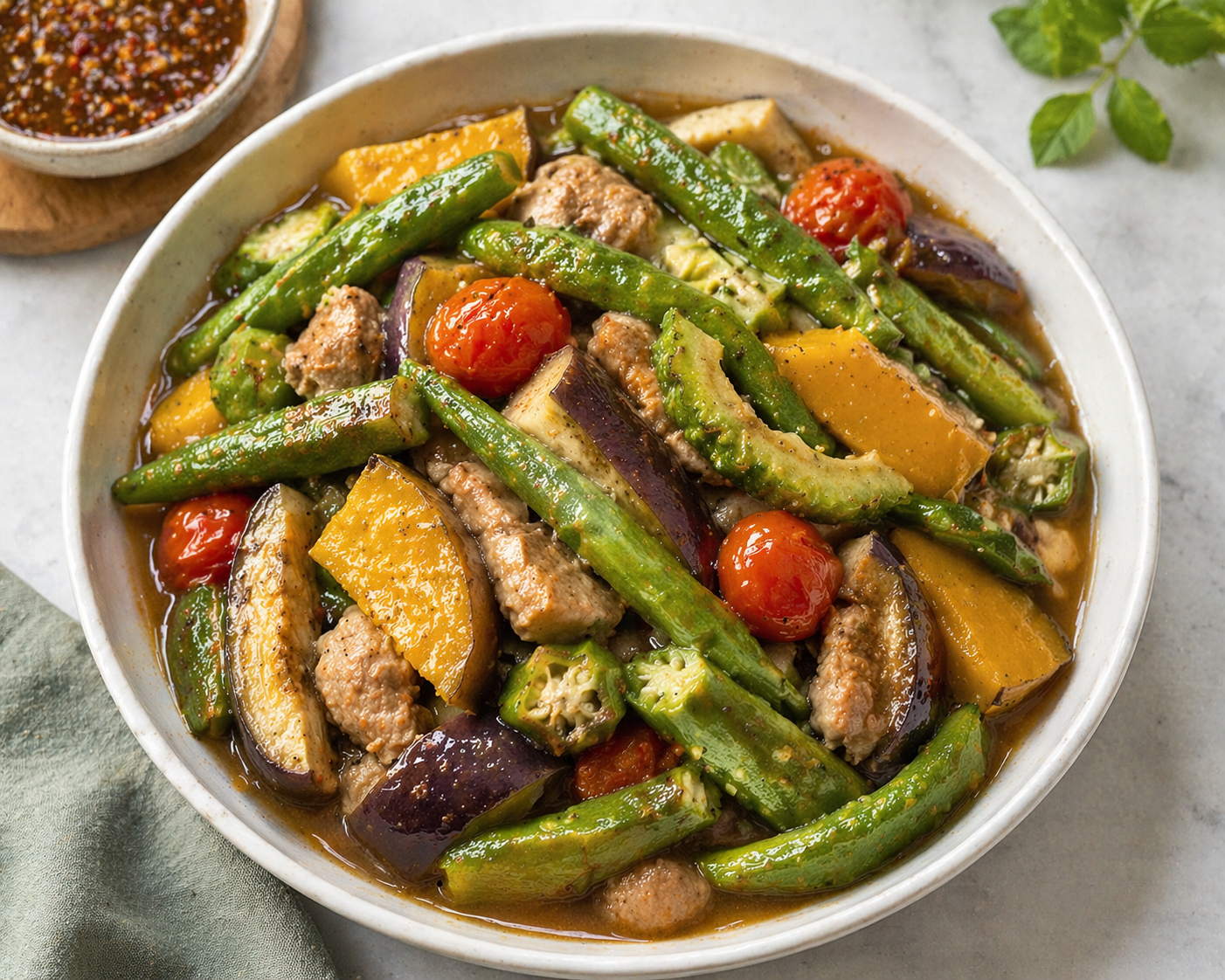
Growing up in a Filipino household, Pinakbet was one of those dishes that instantly made the whole home feel warm and alive. The smell of sautéed garlic, the sight of colorful vegetables simmering in bagoong, and the comforting feeling of a simple meal shared with family — this is the heart of Filipino cooking.
Pinakbet is a traditional Ilocano vegetable stew known for its bold flavors: a beautiful mix of bitterness, sweetness, and savory depth. It’s healthy, affordable, and proudly rooted in Filipino culture.
⏱️ Recipe Information
- Prep Time: 15 minutes
- Cooking Time: 25–30 minutes
- Total Time: 40–45 minutes
- Servings: 4–6 servings
🥗 Ingredients
Vegetables
- 1 small eggplant, sliced
- 1 bitter melon (ampalaya), sliced
- 10 pieces okra, ends trimmed
- 1 cup squash, cubed
- 1 cup long beans (sitaw), cut into 2-inch pieces
- 2 tomatoes, diced
- 1 onion, chopped
- 2 cloves garlic, minced
Protein (optional)
- ¼ lb pork belly OR shrimp
Seasonings
- 2 tablespoons bagoong alamang (shrimp paste)
- ½ cup water
- Salt & pepper to taste
- 1 tablespoon cooking oil
🍅 Ingredient Notes
- Ampalaya brings a signature bitterness — essential for authentic Pinakbet.
- Sitaw adds crunch and fiber.
- Okra naturally thickens the sauce.
- Squash adds sweetness and color balance.
- Bagoong is the soul of the dish — choose sautéed shrimp paste for a deeper, richer flavor.
- Pork belly adds umami, but shrimp or vegetarian versions are just as delicious.
🔪 Step-by-Step Instructions
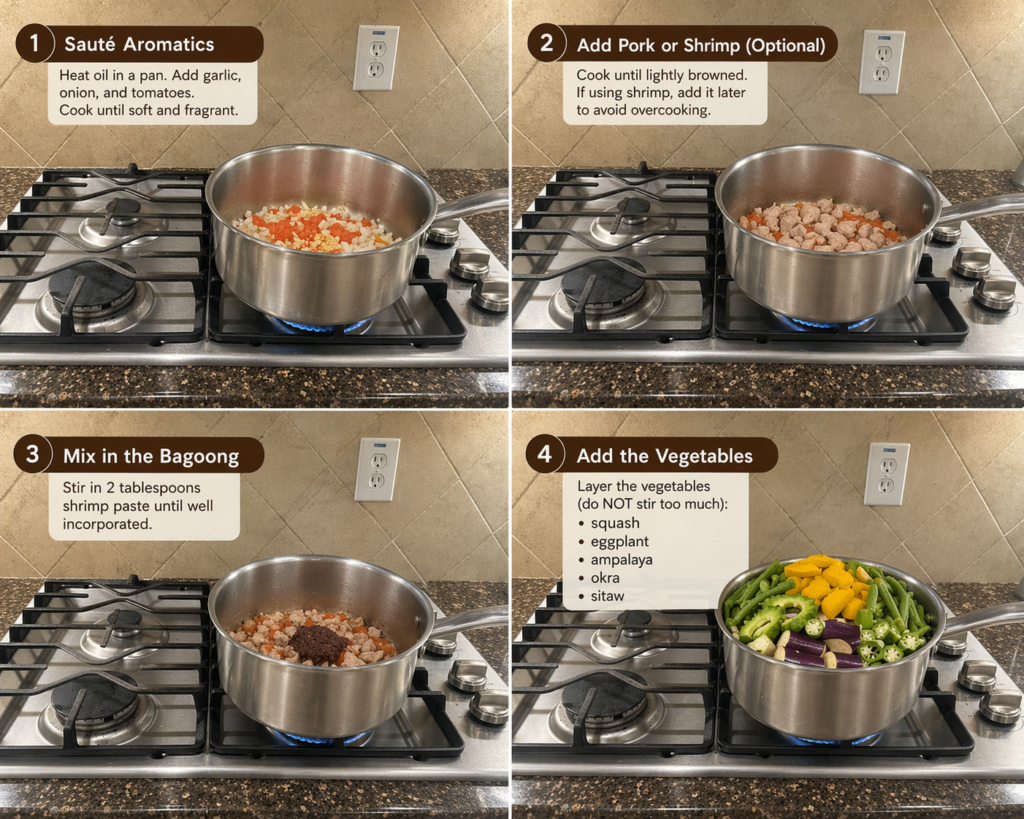
- Sauté Aromatics
Heat oil in a pan. Add garlic, onion, and tomatoes. Cook until soft and fragrant. - Add Pork or Shrimp (Optional)
Cook until lightly browned. If using shrimp, add it later to avoid overcooking. - Mix in the Bagoong
Stir in 2 tablespoons shrimp paste until well incorporated. - Add the Vegetables
Layer the vegetables (do NOT stir too much):- squash
- eggplant
- ampalaya
- okra
- sitaw
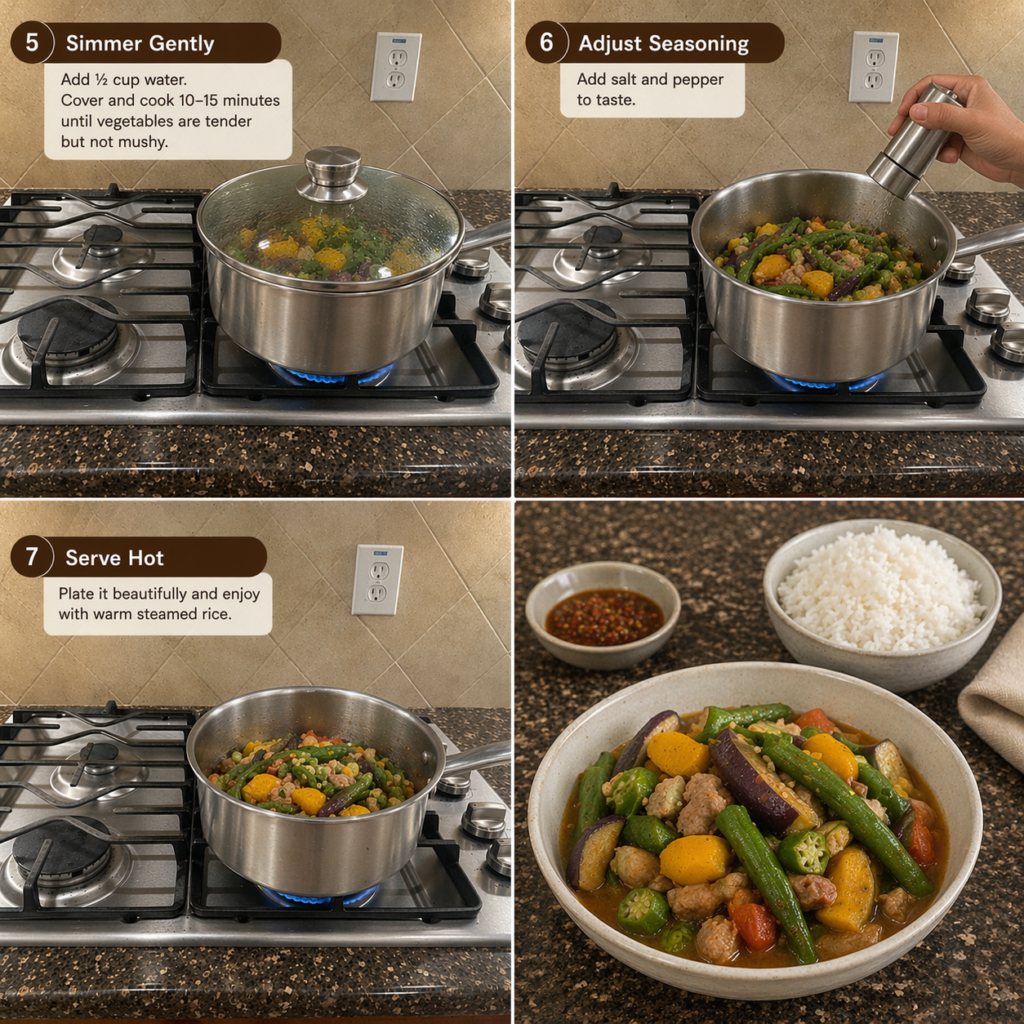
- Simmer Gently
Add ½ cup water. Cover and cook 10–15 minutes until vegetables are tender but not mushy. - Adjust Seasoning
Add salt and pepper to taste. - Serve Hot
Plate it beautifully and enjoy with warm steamed rice.
🥡 Storage Instructions
- Store leftovers in an airtight container for up to 3 days.
- Reheat gently on stovetop to maintain texture.
- Avoid freezing — vegetables may turn mushy.
🔄 Substitutions
- No ampalaya? Use green bell pepper for mild bitterness.
- Vegetarian version: Skip pork; add tofu or mushrooms.
- No bagoong? Use soy sauce + anchovy essence (not authentic but works).
- Low-sodium version: Use less bagoong and increase tomatoes.
🍽️ Serving Suggestions
- Best served with steamed white rice
- Pair with fried tilapia, grilled pork, or roasted chicken
- Add spicy vinegar on the side for extra kick
🧠 Nutrition Notes
- High in fiber and antioxidants
- Great for digestion
- Low-calorie, nutrient-dense
- Packed with vitamins A, C, and folate
❓ Frequently Asked Questions
Q: Can I make Pinakbet without pork?
Yes! Many Filipinos cook it completely vegetarian. The flavor still comes from bagoong.
Q: How do I reduce the bitterness of ampalaya?
Salt it for 10 minutes, rinse, then cook.
Q: What vegetables can I replace?
You can swap squash for sweet potato or add bell peppers for more color.
Q: Why did my vegetables get soggy?
Do not stir often; layer the vegetables and let them steam gently.
⭐ Tips for Best Results
- Use fresh vegetables — frozen veg gets mushy.
- Do not overmix — Pinakbet is layered, not sautéed aggressively.
- Add shrimp last to avoid rubbery texture.
- Taste bagoong first — adjust salt accordingly.
🔀 Variations
- Ilocano Pinakbet: Dry style (less water), stronger bagoong flavor
- Tagalog Pinakbet: Sweeter, sometimes includes squash heavily
- Spicy Pinakbet: Add siling labuyo
- Seafood Pinakbet: Shrimp + squid