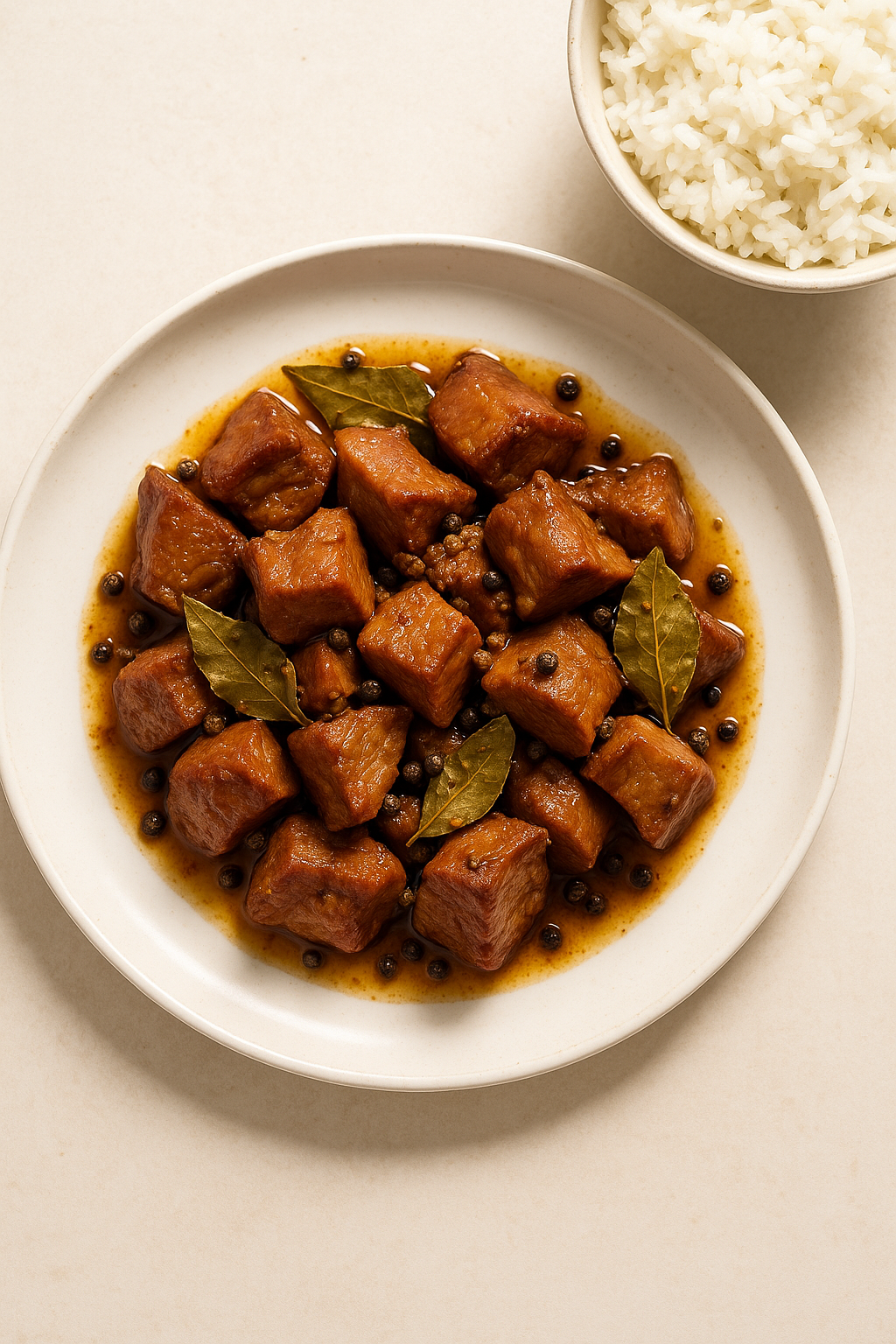
Embracing the Heart of Filipino Cuisine
❤️
Every Filipino family has a version of pork adobo, and this one is inspired by the cozy, home-cooked meals many of us grew up with. The smell of soy sauce, vinegar, garlic, and peppercorn simmering slowly in the kitchen is enough to bring you back to childhood mornings, rainy afternoons, and Sunday lunches with family. Pork adobo is simple, humble, and beautifully rich — a dish that represents comfort, togetherness, and the unmistakable flavors of Filipino culture.
Whether you serve it with warm rice or prepare it ahead for the week, this timeless adobo gets even better as it sits — the perfect make-ahead Filipino classic.
🛒
Ingredients
- 2 lb pork belly or pork shoulder, cut into 2-inch chunks
- 1 tbsp cooking oil
- 1 head garlic, crushed
- 1/2 cup soy sauce
- 1/3 cup cane vinegar (or white vinegar)
- 1 cup water
- 3 bay leaves
- 1 tbsp whole peppercorns
- Salt or sugar (optional, to taste)
🔎
Ingredient Notes
- Pork belly gives the richest, most flavorful adobo, while pork shoulder makes a leaner version.
- Cane vinegar provides the most authentic taste, but white vinegar or apple cider vinegar also work.
- Whole peppercorns are essential — they release aroma slowly as the stew simmers.
- Garlic should be crushed rather than chopped to deepen the flavor.
- Soy sauce brands like Silver Swan or Datu Puti create the most Filipino flavor profile.
🍳
Step-by-Step Instructions
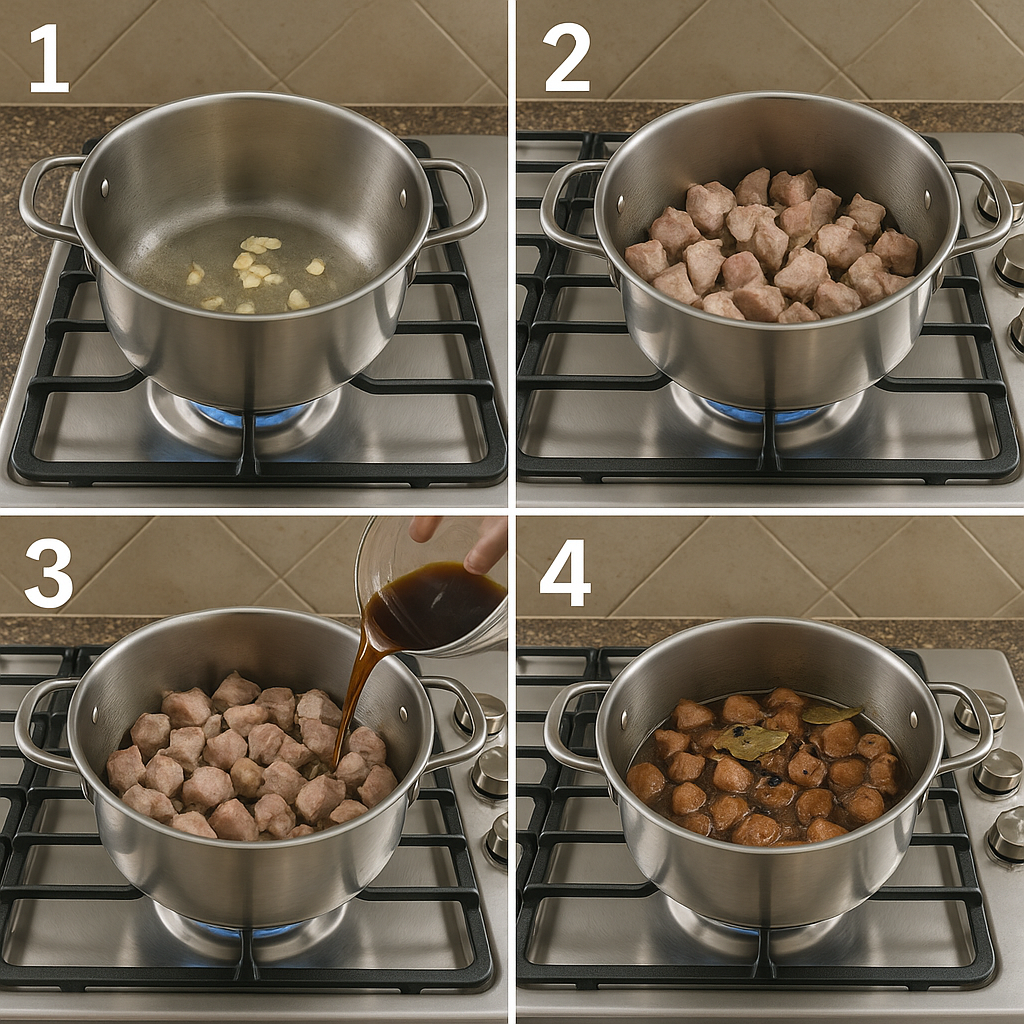
- Heat oil in a pot over medium heat. Add the crushed garlic and sauté until lightly golden and fragrant.
- Add the pork and sear each side for 5–7 minutes until lightly browned.
- Pour in the soy sauce and vinegar without stirring. Let it boil for 1 minute to mellow the acidity.
- Add water, bay leaves, and whole peppercorns.
- Cover and simmer on low heat for 45–60 minutes, or until pork becomes fork-tender.
- Remove the lid and allow the sauce to reduce and thicken until glossy.
- Taste and adjust seasoning. Add a pinch of sugar if you prefer a balanced savory-sweet flavor.
- Serve warm over steamed rice.
🔄
Substitutions
- Pork → Chicken for a lighter version
- Soy sauce → Coconut aminos for gluten-free or low-sodium
- Cane vinegar → Apple cider vinegar
- Whole peppercorns → Ground pepper (use sparingly)
- Bay leaves → A tiny pinch of oregano in emergencies
🥡
Storage Instructions
Adobo stores beautifully and tastes even better the next day.
- Store in an airtight container in the refrigerator for up to 4 days.
- Freeze for up to 2 months.
- Reheat on the stovetop with a tablespoon of water to loosen the sauce.
Bonus:
You can shred leftover pork and pan-fry it to make crispy adobo flakes for breakfast.
🔥
Tips for the Best Results
- Do not stir after adding vinegar — this prevents harsh acidity.
- Sear the pork well before simmering to build deeper flavor.
- Reduce the sauce until thick and glossy; this is what makes it classic Filipino adobo.
- Add a small pinch of sugar for balance — especially if using salty soy sauce.
- Let it sit for 15–20 minutes before serving to allow flavors to settle.
🍽
Variations
- Adobo sa Gata – add coconut milk during simmering for a creamy Bicol-style version.
- Spicy Adobo – add chili flakes or fresh red chili.
- Dry Adobo – simmer until sauce completely cooks down and pork caramelizes.
- Chicken & Pork Adobo – the fiesta version, deeper and more savory.
- Adobo with Potatoes or Quail Eggs – hearty and budget-friendly.
🧠
Nutrition Notes
(Estimated per serving)
- High-protein, rich in healthy fats
- Low-carb and keto-friendly
- Calories vary depending on pork cut
- Watch sodium if sensitive — choose low-sodium soy sauce
❓
FAQs
Q: Can I use chicken instead of pork?
Yes! Chicken thighs yield juicy, flavorful adobo.
Q: Why shouldn’t I stir vinegar right away?
Allowing it to boil untouched removes sharp acidity.
Q: How do I prevent the sauce from becoming too salty?
Add more water, potatoes, or a pinch of sugar.
Q: Can I add onions?
Yes — onions add sweetness but are not traditional.
Q: Can I make this in an Instant Pot?
Pressure cook for 25 minutes, then sauté to reduce the sauce.